How to Travel Sustainably Without Sacrificing Luxury: Four Better Travel Choices
Two very different experiences, and here's how to choose the right one for your trip.
How to travel sustainably means making travel choices that are good for you, for the communities you visit, and for the planet, without treating those things as a compromise on quality or experience. It means being thoughtful about where you go, how you get there, who you spend your money with, and what kind of traveller you want to be. Sustainable travel is not about doing less. It is about doing it better.
The Daydream We Are All Sold (And What It Is Hiding)
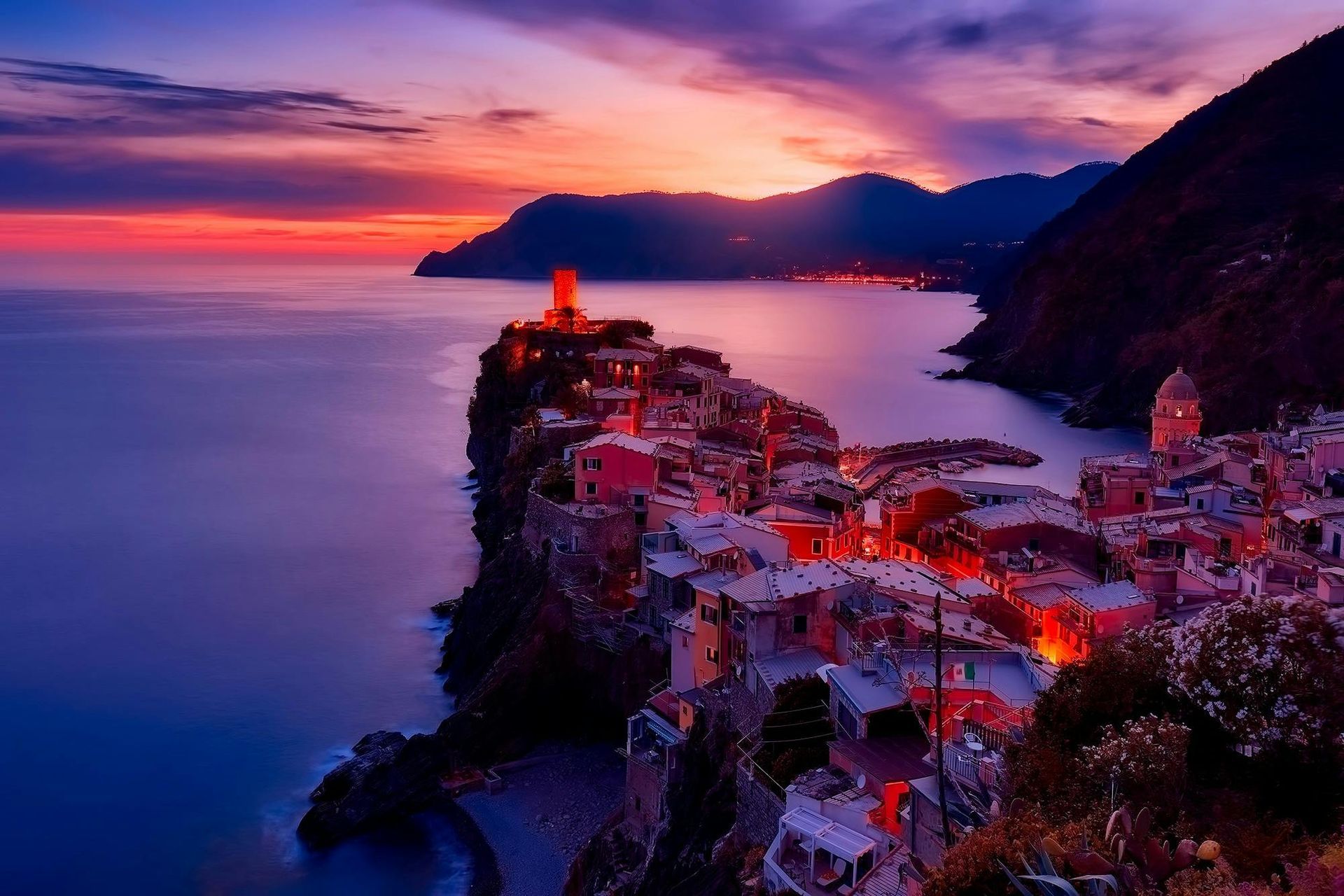
It is tempting. The daydream of snapping that perfectly posed picture of paradise: the prize shot showcasing your effortless escape in an entirely enviable location, as seen on social media.
But what is not pictured? Long lines of people waiting to take the same photo, crowds gathered as early as sunrise, feeds flooded with carbon-copy images, more people influenced to flock to the same spots. Not to mention the inevitable disappointment when reality does not quite live up to the edited post.
Countless travel locations have been overrun by holiday makers inspired by influencers. So much so that some destinations and tourist spots have had to close their doors to visitors altogether, while protests by locals against tourism are on the rise.
Perhaps it is time to be de-influenced. While this trend carries its own complexities and nuances, it is one worth keeping in mind when making holiday choices.
Being de-influenced can look like:
- Choosing to go off the beaten path instead of basing your itinerary around attractions affected by over-tourism.
- Seeking out authentic experiences that will live on in your memory far longer than a photo posted on the internet.
- Escaping the content farm altogether by not tagging your location, or not posting at all.
- If you must visit a popular spot, doing so with careful consideration: visiting during the low season, and perhaps saving that photo for your private album.
Learning how to travel sustainably often starts here, with a single decision not to follow the crowd.
Quiet Luxury: Redefining What a Luxury Holiday Actually Means
Quiet luxury made waves in the fashion world, but the mood translates beautifully into travel. The concept upends the idea that luxury must be overtly obvious. Instead, quiet luxury is low-key, effortless, and built on quality. According to Vogue, it is "more a mood than anything else," which makes it ideal as a lens for better travel choices.
It is worth asking whether every holiday truly needs to involve several flights to far-off, sun-soaked climes. Can the retreat you are craving be found closer to home? According to Sustainable Travel International, tourism alone is responsible for eight per cent of the world's carbon emissions, and that footprint is only growing.
Increased carbon emissions, it turns out, does not feel all that luxurious.
Luxury, to us at A'ARU, is the moment your heart stops racing.
It is when you can take a deep, full breath for the first time in weeks and notice the world and your place within it: whether that happens while lounging in a sauna at a locally-owned countryside retreat, or getting lost in a new book on a city break you travelled to by train.
Quiet, sustainable travel enriches your life. And it might be closer to home than you think. But if you have your heart set on a destination further afield, consider extending your trip so the journey carries more weight, and let us help you find the best place to stay while you are there.
The Case for Rail: Slow Travel as the More Romantic Choice
Since 2020, the concept of ‘romanticising your life’ has spread across the internet and into the lives of anyone looking to find delight in daily life. SELF is even calling it a form of mindfulness: ‘Romanticizing your life as a gratitude exercise is about finding your thing, or things, and cultivating a practice around them.’
Romanticising life is built into our name. A’ARU is the ‘Field of Reeds’ - an idealised vision of ones life on earth – and we’re dreaming of ways we can find this romantic, idealisation of life through socially and environmentally conscious travel. In particular: slow travel. Even more specifically: rail travel.
Think about it – the cinema-set feeling of the train station, the soothing sway of the railcar, the world passing by the window like a moving painting, an audiobook in your ear narrating the moment. As Green Guides puts it, ‘Train travel helps us take more time to slow down and notice the world around us, a benefit both to travellers and the planet.’
The obvious benefits of train travel are vast – the city-centre locations of rail stations, non- existent jetlag, avoiding the hassle of airport security, physically seeing more of the world around you – but the biggest draw for us is the environmental benefit, especially in comparison to flying.
Writing for the BBC, Jocelyn Timperley says it only takes a 3,000-mile return flight ‘to use up one-fifth of your “carbon budget” for the whole year. This budget is the amount of carbon each person can emit in 2030 while still avoiding dangerous levels of global warming. Making the same journey by train would use roughly one-50th of your yearly budget.’ The 2020 Transport and Environment Report concluded that ‘rail travel is the best and most sensible mode of travel, apart from walking or cycling.’
That sounds like a better (and more romantic!) travel choice to us.
Being Part of a Bigger Story: How Your Choices Shape the Places You Visit
It is not a new concept to seek out local experiences when travelling. Just as easily as we can be influenced to visit popular destinations, we crave the authentic, the little-known, the genuinely local. But for about as long as tourism has existed, it has centred the traveller. The story is all about the person doing the travelling as they seek out new experiences.
What if, instead of making the story about us, we aim to become part of a larger story unfolding around us? The story of the communities we visit. The story of cultures different from our own. The story of our remarkable planet.
Writer and consultant JoAnna Huagen offers some useful questions to ask in the planning stages: "How exactly do service providers support 'local' people? What exactly is the situation on the ground? Who exactly is benefiting, and in what way?"
Taking the time to consider how our choices impact people beyond ourselves is a critical step in sustainable tourism. Fortunately, there are many independently-owned properties across the world that are choosing to put people over profit in their day-to-day operations: supporting craftspeople and farms by sourcing products on their doorstep, giving to local charities that align with their values, and building businesses that genuinely serve the communities around them.
We are here to help you find them.
Conclusion: Let’s Redefine ‘Holiday,’ Together
Quick answer:
How to travel sustainably involves four key shifts: choosing less-visited destinations to avoid contributing to over-tourism; redefining luxury as quality and presence rather than distance and spectacle; opting for rail over air travel where possible to reduce your carbon footprint significantly; and spending your money with independently-owned properties that reinvest in their local communities.
Frequently Asked Questions
Q: What does it mean to travel sustainably? A: Sustainable travel means making choices that minimise negative environmental and social impact while maximising positive contribution to the places and communities you visit. It includes decisions about how you get there, where you stay, who you spend your money with, and how you behave as a visitor. It does not require giving up quality or experience; it often improves both.
Q: Is train travel really better for the environment than flying? A: Yes, substantially. According to research cited by the BBC and the 2020 Transport and Environment Report, a 3,000-mile return flight uses approximately one-fifth of a person's annual carbon budget, while the equivalent rail journey uses around one-fiftieth. Rail is consistently identified as the most environmentally sound mode of long-distance travel, after walking and cycling.
Q: What is quiet luxury travel? A: Quiet luxury travel is the idea that the best travel experiences are built on quality, presence, and authenticity rather than obvious opulence or distance. It might mean a locally-owned countryside retreat rather than a long-haul resort, or a thoughtfully extended train journey rather than a quick flight. The emphasis is on depth of experience over spectacle.
Q: How do I avoid contributing to over-tourism when I travel? A: Travel in the low or shoulder season rather than peak periods. Choose lesser-known destinations or neighbourhoods rather than the most photographed spots. Be thoughtful about sharing locations on social media. Spend your money with locally-owned businesses rather than international chains. When visiting genuinely popular sites, consider whether your visit adds to the problem and plan accordingly.
Q: How do I find independently-owned sustainable properties to stay in? A: Look for properties that are transparent about their sourcing, staffing, and community contributions. Ask directly how the property supports local suppliers and what causes it gives to. Work with curators like A'ARU, whose role is specifically to identify independently-owned properties that put people over profit, and who have done the research on your behalf.
Q: What is slow travel and why does it matter? A: Slow travel is the practice of spending more time in fewer places rather than rushing through many destinations. It reduces the environmental cost of frequent short trips, deepens your connection to the places you visit, and produces a qualitatively richer experience. Rail travel is one of the most natural expressions of slow travel: the journey itself becomes part of the experience rather than simply a means to an end.
ABOUT A'ARU COLLECTIVE
A'ARU Collective curates considered travel experiences rooted in place, people and authenticity. We design journeys that go beyond where you stay, connecting you more deeply to how you travel.
If you’re planning your next escape, we’ll help shape something meaningful, seamless and entirely your own.